
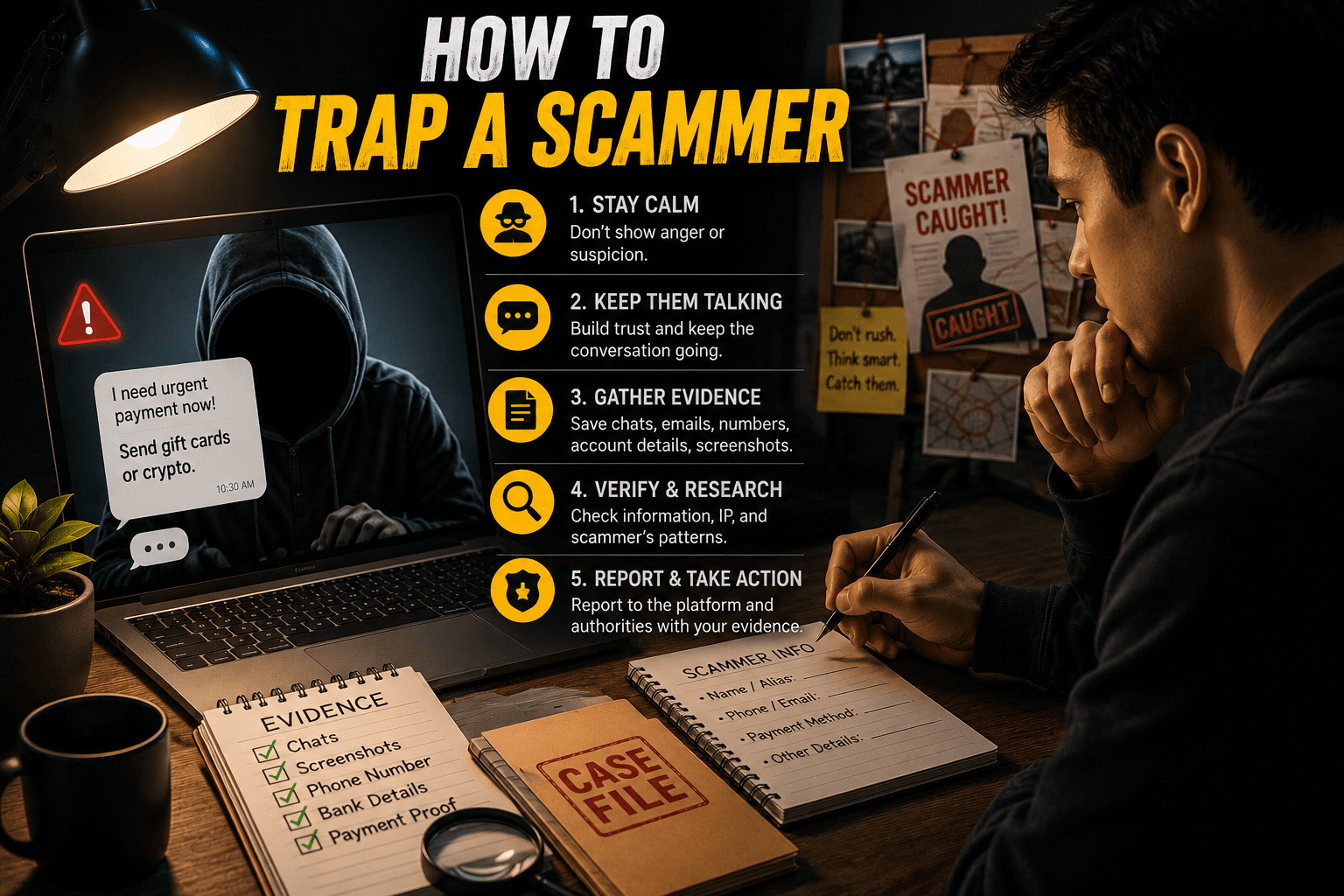
Financial scams are no longer isolated incidents. From fake investment brokers to crypto fraud schemes, scammers have grown more sophisticated, more organized, and harder to detect. But here’s what they don’t tell you—scammers leave trails, and those trails can be used against them. If you suspect you’re being targeted, you don’t have to remain a passive victim. There are real, actionable ways to trap a scammer and build a case strong enough for authorities to act.
Recognize the Setup Before You Spring the Trap
Before you can trap a scammer, you need to confirm you’re dealing with one. Common red flags include unsolicited contact, guaranteed high returns on investments, urgent pressure to deposit funds, and a complete lack of verifiable licensing or regulatory oversight. Scammers typically operate under fake company names, use disposable phone numbers, and build polished-looking websites to create an illusion of legitimacy.
Once you recognize the pattern, shift your mindset. Stop engaging emotionally. Start gathering evidence.
Document Every Interaction
The single most powerful thing you can do is document everything from the moment you suspect fraud. Screenshot every conversation — WhatsApp messages, emails, Telegram chats, and any social media exchanges. Save every transaction record, even partial ones. Write down dates, times, and the exact claims the scammer made, including promises of returns, account managers’ names, and platform details.
This documentation is what regulators, law enforcement, and recovery experts need to build a case. Without it, tracing scammers becomes significantly harder.
Keep the Conversation Going — Carefully
One of the most effective ways to trap a scammer is to continue engaging them while you gather more information. Do not accuse them directly or let on that you’re suspicious. Instead, ask questions that lead them to reveal more details — their company’s registered address, their regulatory body, their licensing number, and how withdrawals are processed.
Scammers often contradict themselves under sustained questioning. They’ll reference regulatory bodies they’re not registered with, provide license numbers that don’t match public databases, or suddenly become evasive when asked for verifiable credentials. Each inconsistency is evidence.
Cross-Check Their Claims Against Public Databases
Legitimate brokers and investment platforms are registered with financial regulators. In the UK, that’s the Financial Conduct Authority (FCA). In Australia, the Australian Securities and Investments Commission (ASIC). In the US, the Securities and Exchange Commission (SEC). Use these public registers to verify whether the platform the scammer is using is actually licensed.
If the broker doesn’t appear in any public database — or appears on a warning list — that confirmation alone is a critical piece of your evidence chain.
Set a Trap with a Small Test Transaction
If you’re still unsure, some fraud investigators recommend making a very small, controlled transaction — one you’re prepared to lose — and then immediately requesting a withdrawal. Legitimate platforms process withdrawals without obstruction. Scammers will delay, impose sudden “tax fees,” invent account verification issues, or simply go silent.
The way a platform responds to a withdrawal request is one of the clearest indicators of fraud. Document every step of this process in real time.
Report to the Right Authorities
Once you’ve gathered sufficient evidence, report the scam to your national financial regulator, local law enforcement, and dedicated cybercrime units. In many countries, there are specific task forces for financial fraud. File a formal complaint with as much supporting documentation as possible — transaction records, screenshots, email chains, and the platform’s website URL.
Also, report to the platform’s payment processor or bank, as chargebacks may be possible depending on how you sent funds. Acting quickly matters here — the sooner you report, the better the chances of any recovery.
Get Expert Help
Trapping a scammer is only half the equation. Getting your money back requires specialized expertise in fraud investigation, regulatory engagement, and financial recovery. You don’t have to navigate this alone.
At FairTradeReviews, we offer free consultation to victims of unregulated brokers and investment scams. Our team investigates fraudulent platforms, exposes unlicensed operators, and guides victims through the reporting and recovery process. If you’ve been targeted—or suspect you’re being manipulated right now—reach out to FairTradeReviews today. Your consultation is completely free, and the sooner you act, the stronger your case.
Leave a Reply